The Crew, the Process, the Hanover Response
When the call from Hanover comes in, the goal is fastest-possible source-control plus right-sized equipment dispatch. The dispatcher captures the loss type (water vs fire vs sewage vs storm), the severity (a sink overflow vs a basement filling), and the access (gate codes, building manager, COIs). The crew is moving inside 10 minutes of the call ending — not 30, not 60.
For losses that need immediate intervention (pipe failure, smoke contamination, sewage event, structural envelope breach), the dispatch standard is on-site inside the hour. Hanover sits roughly 2 miles from our East Hanover Township base, so on a normal-traffic day that translates to 10 to 20 minutes door-to-door. Storm season we pre-stage equipment for surge events so individual response times do not slip even when call volume spikes across the corridor.
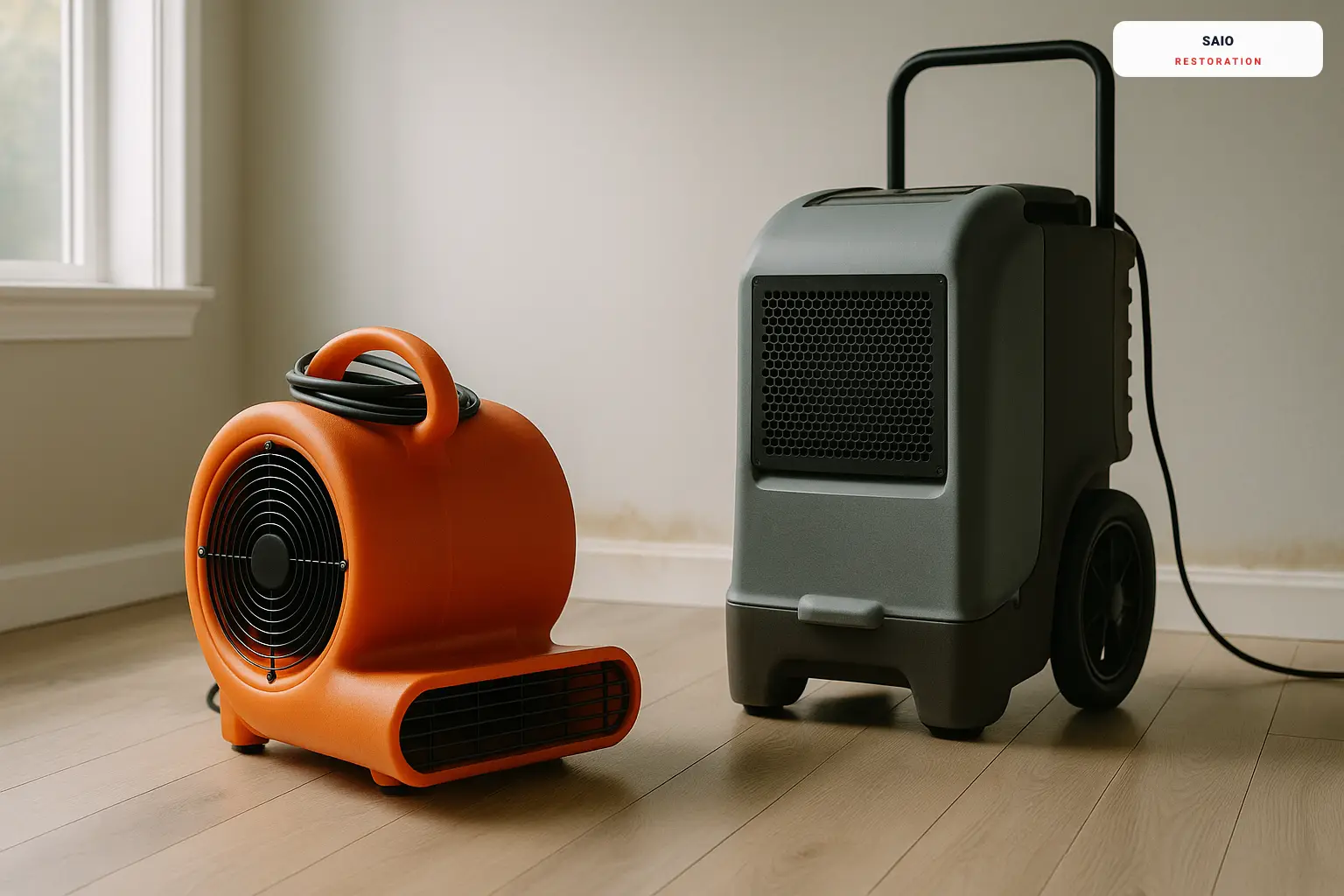
The on-site discipline matters more than the equipment list. Source-control before anything else. Photo + moisture documentation before equipment goes down. Equipment sized to the actual loss, not the truck capacity. Daily monitoring with logged readings until every monitored substrate hits dry-standard. Reconstruction on the back end with the same crew, scoped from the same documented Xactimate. End-to-end accountability through one team and one contract.
How carrier paperwork gets handled in Hanover
Most of our Hanover work is insurance-billed. We document moisture readings against a building diagram, photograph every wet surface before equipment goes down, write Xactimate scopes the adjuster can settle without a callback, and bill carriers directly when authorized. The cause-of-loss narrative we write determines which policy bucket the claim lands in — homeowners (sudden + accidental), NFIP (true flood from rising water), or sewer/water backup endorsement (combined-sewer-overflow events) — so getting that documentation right at hour one is what determines whether the claim closes cleanly or drags through arbitration.