Saio Restoration East Hanover Township
📞 862-421-8853
Property Damage Restoration Bayonne, NJ
24/7 Emergency Response

Water Damage Restoration in East Hanover Township, NJ — Truck Rolling The Moment You Call.

Property restoration based in East Hanover Township, NJ. Morris County coverage. 24/7 emergency dispatch, IICRC-standard methodology, single-source mitigation through reconstruction.

📞 862-421-8853 Local team in East Hanover Township 24/7 dispatch
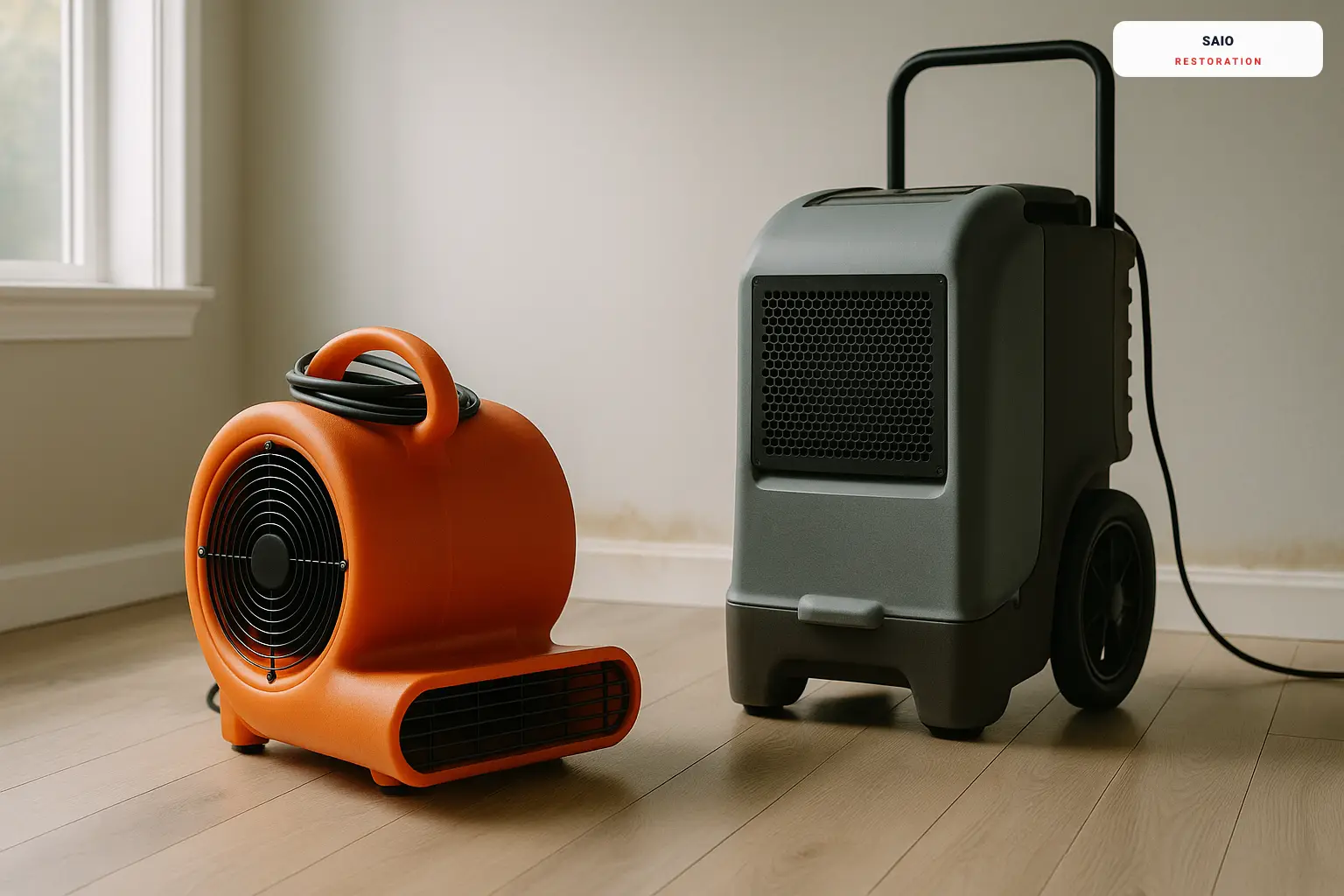
Equipment Industrial extraction + drying
Documentation Daily logs adjusters approve
Trades Reconstruction handled in-house
Local Guide

East Hanover Township Restoration — What You Need to Know

Property restoration based in East Hanover Township, NJ. Morris County coverage. 24/7 emergency dispatch, IICRC-standard methodology, single-source mitigation through reconstruction.

When Reconstruction Should Match Pre-loss Condition (And When It Should Not)

Insurance reconstruction puts your East Hanover Township property back to pre-loss condition. Not better, not worse — pre-loss. That's the standard, that's what the carrier pays for, and that's what our reconstruction scope delivers by default. But there are scenarios where the homeowner sensibly wants to upgrade during the rebuild, and the timing creates an opportunity worth taking.

The case for upgrading: the contractor is already on-site, the demo work is already done, the framing is already exposed, and disruption to daily life is already happening. Adding upgrades to the rebuild scope adds incremental cost but doesn't add new disruption. Common upgrade decisions during reconstruction: replacing carpet with LVP or hardwood, upgrading kitchen cabinet level, adding under-cabinet lighting, replacing toilet/vanity, repainting adjacent unaffected rooms to a fresh color.

The case for staying with pre-loss: the insurance scope covers what the loss damaged. Upgrades are out-of-pocket. If cash flow is tight, defer upgrades to a future remodel project. If the timing is wrong (you're planning to sell within 12-18 months), upgrade ROI may not justify the cost.

We quote upgrades as separate line items on top of the insurance scope so you can decide whether the timing makes sense. Either way, the insurance work proceeds at carrier-approved scope and pricing.

Insurance-billed Restoration for Nj Homeowners — How the Process Actually Works

Most of our East Hanover Township work is insurance-billed. The process is straightforward when handled by a restorer who knows the carrier conversation: open the claim with your insurer, get the claim number, share the claim number with our dispatch, and we handle the rest of the carrier coordination on your behalf.

Specifically: we write the Xactimate scope at carrier-standard pricing for NJ, submit it to your assigned adjuster, walk through the scope on the on-site adjuster visit (if you want us present, which we recommend), document the mitigation and reconstruction work with photos and moisture logs throughout, submit supplements for any conditions discovered during the work that warrant additional scope, and bill the carrier directly when authorized.

Your direct involvement in the carrier conversation is minimal — you sign authorization for direct billing on the first visit, then we handle the rest. Your out-of-pocket cost is your deductible (and any items you choose to upgrade beyond pre-loss condition). Most claims close within 30-60 days from open to final payment for standard residential losses; longer for complex multi-unit or premium-finish losses.

The carriers we work with regularly in NJ: NJM, State Farm, Allstate, Liberty Mutual, Travelers, Progressive, Chubb, plus most regional carriers serving the Morris County market.

What Three Day, Three Week, and Three Month Restoration Projects Have in Common

The East Hanover Township restoration projects we handle range from 3-day mitigations (small water loss, drying-only scope) through 3-week full reconstructions (residential rebuild after a typical loss) up to 3-month complex projects (multi-unit cascade with premium-finish documentation). What they have in common is the methodology — the same documentation discipline, the same IICRC standards, the same daily monitoring rigor — applied at different scales.

What changes across project sizes: equipment density (more drying gear for larger losses), tech crew size (more bodies for complex jobs), specialty trade coordination (more sub-trades for premium-finish work), and the duration of the daily monitoring phase (longer for hardwood-heavy losses or multi-unit cascades). What doesn't change: the moisture readings get taken on the same calibrated meters, the photos get filed in the same documentation system, the carrier scopes get written in the same Xactimate format.

This consistency is deliberate. Our East Hanover Township crew can move from a 2-day basement dry-out to a 3-month luxury condo cascade without changing methodology — just scaling capacity. The methodology is what produces work that holds up, and the consistency is what produces predictable claim closure regardless of project size.

24/7 Emergency Property Damage Restoration in East Hanover Township and Surrounding Morris County Communities

Property losses don't check the calendar. Pipe bursts at 2am on a holiday weekend. Sewer backups during the heaviest rain of the year. Kitchen fires during dinner prep. Our East Hanover Township dispatch is genuinely 24/7/365 — a real human answers, gets the address and loss type, and a truck rolls while you're still on the phone with us.

What our 24/7 capability covers: water damage emergencies (pipe bursts, appliance failures, storm-related water intrusion), fire and smoke aftermath (immediate response after the fire department leaves), sewer backup (Cat-3 protocol with full PPE), and emergency board-up after storm or fire damage to building envelopes. For non-emergency restoration work (mold remediation, planned reconstruction, content cleaning), normal business hours apply but we can adjust for client schedules.

Coverage area: East Hanover Township, Hanover, Florham Park, Whippany, Livingston, plus the immediately surrounding Morris County municipalities. Standard arrival time on emergencies: under one hour during normal traffic. During major weather events when call volume spikes across the corridor, we run pre-staged equipment from our East Hanover Township base so individual response times don't slip even at high volume.

What the First Hour of a Property Loss Actually Looks Like

The first hour after a property loss is the highest-leverage time on the entire job. Most of the eventual claim cost is decided not by the loss itself, but by what happens (or doesn't happen) in the first 60 minutes. From East Hanover Township dispatch our standard target is on-site within the hour, and the protocol once we arrive is built around capturing those high-leverage minutes.

What we do on arrival, in this order: confirm the source is fully off, assess loss category per IICRC S500, photograph every wet surface before equipment goes down, take initial moisture readings on each substrate, write the cause-of-loss narrative for the insurance claim. Only after that does the actual extraction equipment go to work. The sequence matters because the documentation that gets written in the first hour is what determines how the rest of the project goes — both technically and financially.

What clients sometimes try to do before we arrive (and what we ask them not to): lifting wet drywall (it crumbles and complicates demo), running heaters (drives moisture deeper into materials), throwing damaged contents away (becomes unprovable losses), signing AOB paperwork from contractors who arrive unsolicited. The 30-60 minutes between your call and our arrival are best spent moving valuables out of the cascade path and photographing the loss for insurance.

Emergency Restoration

How We Handle Property Losses in East Hanover Township, Nj.

Water Damage Restoration

24/7

Documented structural drying with daily moisture readings on every wet substrate. Hardwood, drywall, subfloor — measured separately until each hits dry-standard.

  • 24/7 emergency dispatch
  • Truck-mounted extraction
  • Industrial drying equipment
Learn more

Fire Damage Restoration

24/7

Kitchen flare-ups through full structure fires — restoration scope built around what is salvageable vs what insurance will replace.

  • Soot + smoke odor removal
  • HVAC decontamination
  • Pack-out + content cleaning
Learn more

Storm Damage Restoration

24/7

Emergency board-up, water extraction, structural repair, and full reconstruction after wind, hail, and rain events.

  • Emergency board-up + tarping
  • Wind-driven rain water extraction
  • Roof + envelope repair
Learn more

Mold Remediation

Containment, removal, and prevention of mold growth after water events or chronic moisture problems.

  • IICRC S520 protocol
  • Negative-air containment
  • HEPA filtration
Learn more

Sewage Cleanup

24/7

Documented decontamination protocol with before/after ATP swab readings — the documentation insurance and health inspectors require for sign-off.

  • IICRC S500 Cat-3 protocol
  • Full Tyvek + HEPA respirator PPE
  • Porous-material removal to flood line
Learn more

Reconstruction

Full structural rebuild after mitigation — drywall, flooring, paint, trim, cabinetry. Same crew finishes the job.

  • Drywall replacement + finish
  • Hardwood, LVP, tile, carpet flooring
  • Cabinetry + trim work
Learn more
24/7 Emergency

Emergency restoration dispatch from East Hanover Township — answering 24/7.

We dispatch a tech 24/7 across the East Hanover Township metro. Average on-site time is under an hour.

Call 862-421-8853
The difference

Why Customers Choose Us

Real reasons. No invented stats, no manufactured awards.

  • 01

    Owner-Led Operations

    Direct access to the owner during your project, not a project-coordinator buffer. Decisions get made fast. Issues get resolved without waiting for a callback from someone who has to "check with the boss."

  • 02

    Documented Drying, Not Guessed

    Calibrated moisture meters on every wet substrate, daily readings logged, equipment repositioned based on what is actually drying. We close the mitigation phase only when readings return to dry-standard for each material.

  • 03

    Built For East Hanover Township Properties

    Older NJ housing has galvanized supply lines, plaster walls, original hardwood, and the kind of architectural detail that has to be preserved through any restoration job. We know what we are walking into.

Process

How It Works

  1. 01

    Phone Triage

    Real human dispatch from East Hanover Township. We sort loss type on the first call so the truck arrives equipped for what we are walking into.

  2. 02

    On-site Assessment

    Photos of every wet surface, moisture readings of every substrate, written cause-of-loss narrative, confirmation the source is fully off.

  3. 03

    Containment + Extraction

    Standing water removed first. Affected areas isolated to prevent spread. Damaged porous material cut to documented flood line and bagged for disposal.

  4. 04

    Documented Drying

    Industrial drying equipment sized for the loss volume. Daily moisture readings logged on a building diagram. Equipment runtime tracked for the insurance claim.

  5. 05

    Reconstruction + Walkthrough

    Drywall, flooring, paint, trim — all matched to pre-loss condition. Final walkthrough confirms the work is done before the project closes.

Service Area

Serving Morris County

From our East Hanover Township base we cover Morris County and the immediately surrounding NJ municipalities. Sub-hour response on active losses, pre-staged equipment for storm season, IICRC-standard methodology applied to every job regardless of size.

Counties Covered

  • Morris County, NJ

Cities We Service

Each Morris city below opens a local page with arrival times from our East Hanover Township base and the loss patterns we handle most often in that municipality.

Not sure if you're in our area? Call 862-421-8853 and we'll tell you in 30 seconds.
FAQ

Frequently Asked Questions

If you don't see your question, just call or message us.

Do I have to leave my home during restoration? +

For most water-damage jobs, no. We work in the affected area while you live in the rest of the home. Cat-3 sewage cleanup requires evacuation of the affected area during the cleanup phase because the work itself aerosolizes pathogens. Major fires often require temporary relocation while smoke + soot are addressed. We discuss displacement on the first call so you can plan.

How much does water damage restoration cost? +

A typical East Hanover Township residential water mitigation runs $3,000-$8,000 depending on loss size and material types affected. Reconstruction adds another $5,000-$30,000 depending on scope. Most jobs are insurance-billed after deductible. We give a realistic estimate after the on-site assessment, not a guess on the phone.

What is the difference between water damage and flood damage? +

Water damage is sudden and accidental — pipe burst, appliance failure, storm intrusion through a damaged roof. Flood damage is rising surface water from outside the structure. Standard homeowners insurance covers water damage. Flood requires separate NFIP flood insurance. We document the source clearly so the right policy pays the claim.

Are you open weekends and holidays? +

Emergency dispatch is 24/7/365 including all holidays. Reconstruction work and consultations follow business hours but we can adjust for client schedules.

How do you make sure mold does not come back? +

Mold prevention happens during drying, not after. We hold the structure under controlled airflow until moisture meters confirm wood, drywall, and substrate are back inside the manufacturer-approved dry range. Anything porous that absorbed contaminated water comes out. Surfaces receive a registered antimicrobial before reconstruction. We also pull access panels and inspect HVAC ductwork if water tracked into the system.

Will my floors and walls have to come out? +

Often less than people expect. Category-1 (clean supply-line) water that we reach inside 24-48 hours can usually be dried in place. Category-3 (sewage, river, ground intrusion) is different — IICRC S500 protocol requires removing porous materials those waters contacted. We cut to a documented flood line and replace what comes out.

How long does drying take after a water loss? +

Three to five days for a typical residential water loss. Hardwood floors and dense materials can take longer — sometimes 7-10 days. We monitor with calibrated moisture meters daily and only stop drying when readings return to dry-standard moisture content for the materials in your home.

Call Now • East Hanover Township

East Hanover Township Loss Right Now? Call the Crew That Documents Everything.

One phone call gets a truck rolling. Real East Hanover Township team, real local response time, no automated phone tree. We'll be on site fast.

📞 Tap To Call 862-421-8853

24/7 Emergency Dispatch

📞 Call 862-421-8853